

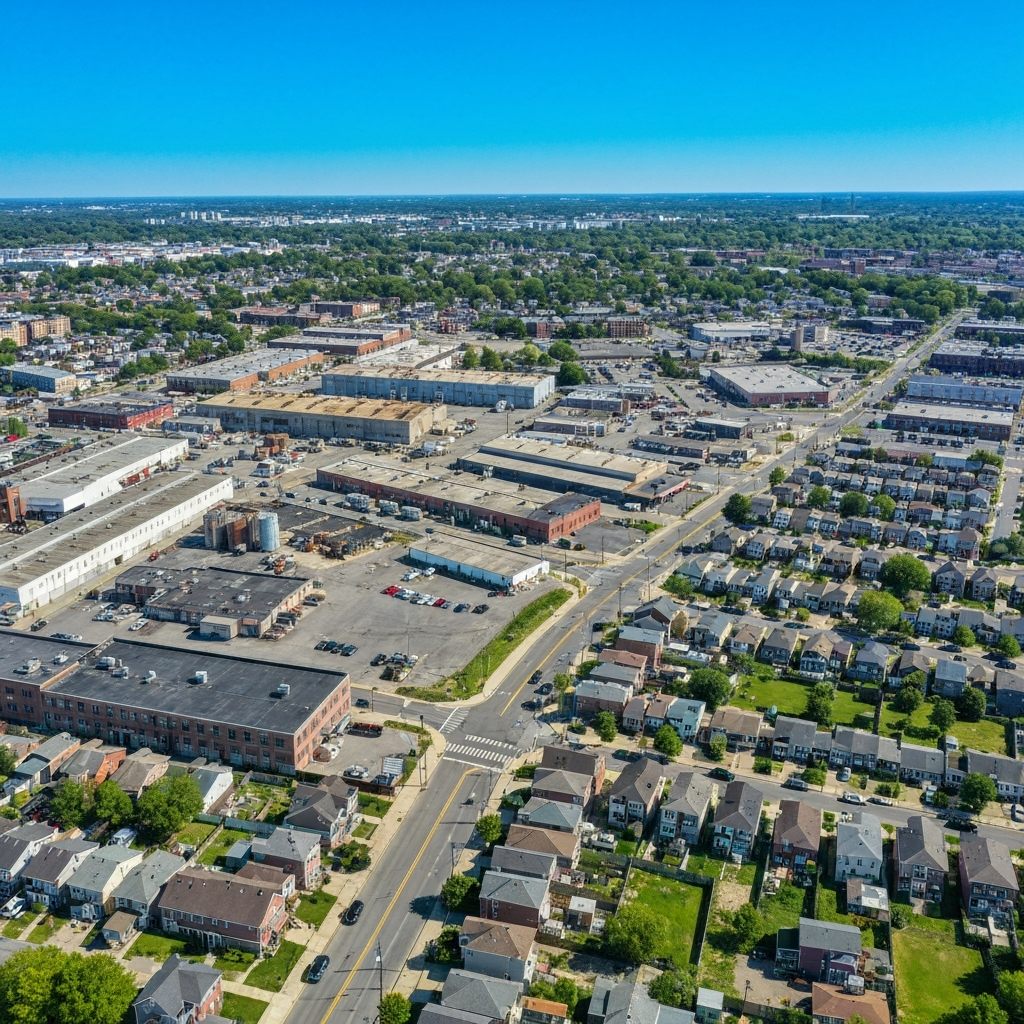
Newark’s Ironbound neighborhood, a vibrant and diverse community, is grappling with significant environmental challenges stemming from industrial expansion and pollution. Residents and local organizations are voicing concerns over the cumulative impact of these developments on public health and quality of life.
Industrial Growth and Environmental Impact
The Ironbound area is characterized by a high concentration of industrial facilities, including multiple gas-fired power plants, manufacturing sites, and heavy truck traffic associated with the nearby Port of Newark. This industrial density has led to elevated levels of air pollution, contributing to health issues such as asthma and other respiratory conditions among residents.
In June 2025, the Passaic Valley Sewerage Commission (PVSC) approved the construction of a fourth gas-fired power plant in Newark, despite substantial community opposition. The proposed facility is slated to be built adjacent to the Ironbound neighborhood, raising concerns about increased pollution in an already heavily industrialized area. Community leaders argue that this decision disregards the health and well-being of local residents, who are already burdened by existing environmental hazards.
Community Advocacy and Environmental Justice
Local organizations, such as the Ironbound Community Corporation (ICC) and the South Ward Environmental Alliance (SWEA), have been at the forefront of advocating for environmental justice. These groups have organized protests, conducted air quality monitoring, and engaged in policy advocacy to address the environmental concerns affecting their communities.
Kim Gaddy, founder and director of SWEA, emphasized the importance of community-led initiatives in combating pollution. “Our teams counted over 1,000 trucks per hour passing through our neighborhoods, significantly contributing to poor air quality,” Gaddy noted. This data underscores the need for comprehensive strategies to reduce emissions and protect public health.
Policy Responses and Future Outlook
In response to mounting pressure from community groups and environmental advocates, Newark city officials have introduced measures aimed at mitigating pollution and promoting sustainable development. In December 2025, City Council President Larry Crump introduced the “Ports for People: Newark Fossil Free Future Ordinance,” designed to halt fossil fuel expansion and address major sources of air pollution. The ordinance seeks to prevent public funding for new or expanded fossil fuel facilities and amend land-use codes to prohibit such developments within city limits.
While these policy initiatives represent a step forward, community leaders stress the importance of continued vigilance and advocacy. The Ironbound Community Corporation’s CEO, Hazel Applewhite, stated, “We demand clean energy and environmentally just solutions that prioritize the health and well-being of all communities. For centuries, Black and Brown communities have been disregarded and exploited, often bearing the brunt of pollution and environmental harm.”
As Newark continues to navigate the complexities of industrial growth and environmental sustainability, the voices of its residents remain crucial in shaping a future that balances economic development with the health and well-being of its communities.