

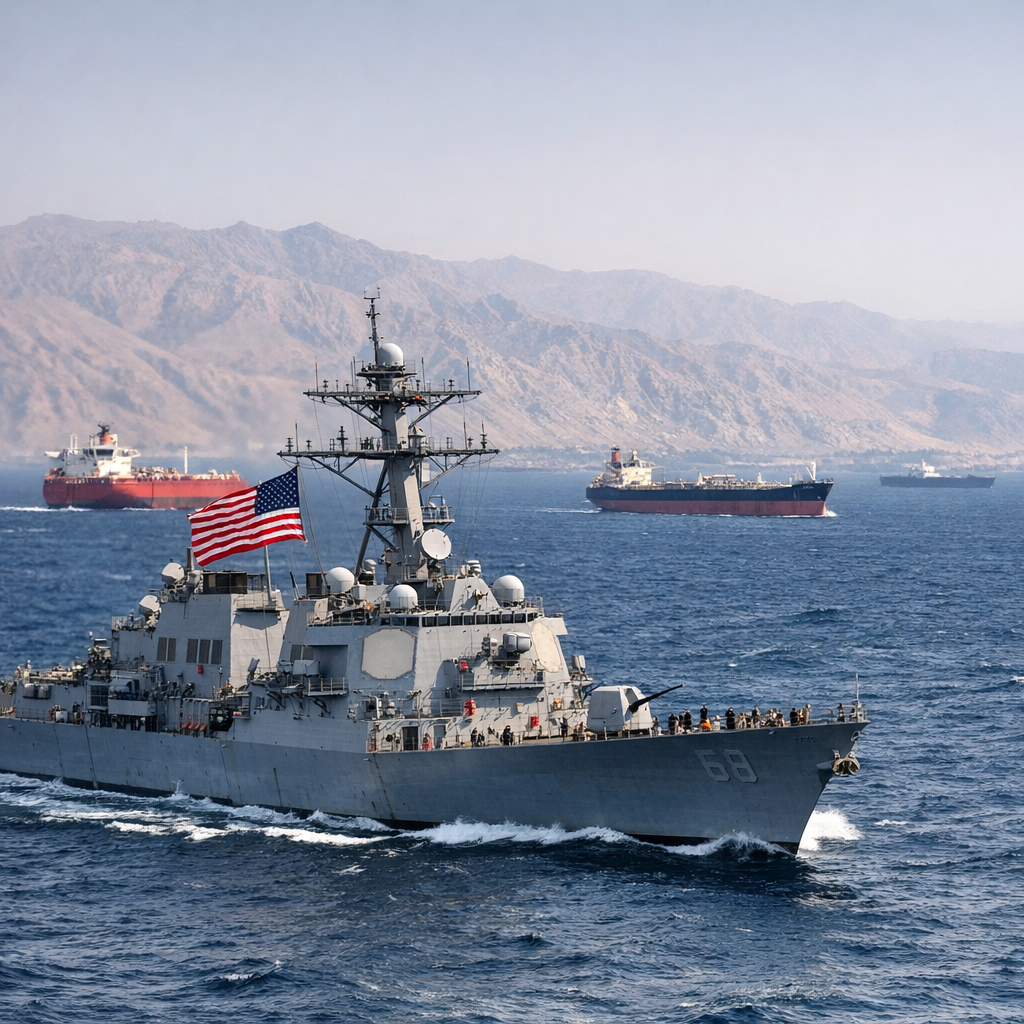
The Strait of Hormuz, a critical maritime chokepoint through which a significant portion of the world’s oil passes, has once again become a focal point of international tension. Recent clashes between the United States and Iran in this strategic waterway have raised concerns about regional stability and global economic implications.
Background of the Conflict
Reports indicate that Washington and Tehran were nearing an agreement aimed at ending their longstanding hostilities. However, this week saw the first deadly military engagement between the two nations over the Strait of Hormuz since a ceasefire was reached in early April. The U.S. initiated “Project Freedom,” deploying guided-missile destroyers, over 100 aircraft, and approximately 15,000 service members to ensure safe navigation through the strait. This operation underscores the strategic importance of the Strait of Hormuz in global energy supply chains.
Implications for Global Stability
The escalation in the Strait of Hormuz has broader implications beyond the immediate region. European markets have reacted negatively, with shares tumbling as the deadlock in U.S.-Iran negotiations dampened risk appetite and rekindled concerns over an economic slowdown. The interconnectedness of global economies means that tensions in one region can have ripple effects worldwide.
Local Perspectives
For residents of Newark, New Jersey, and the broader United States, these developments may seem distant. However, the potential for increased oil prices and economic uncertainty can have tangible effects on daily life, from higher transportation costs to fluctuations in the stock market. Staying informed about international events is crucial, as they often have direct and indirect impacts on local communities.
As the situation continues to evolve, it is essential to monitor credible news sources and understand the broader context of these international tensions. The hope remains that diplomatic efforts will prevail, leading to a de-escalation of hostilities and a return to stability in the region.